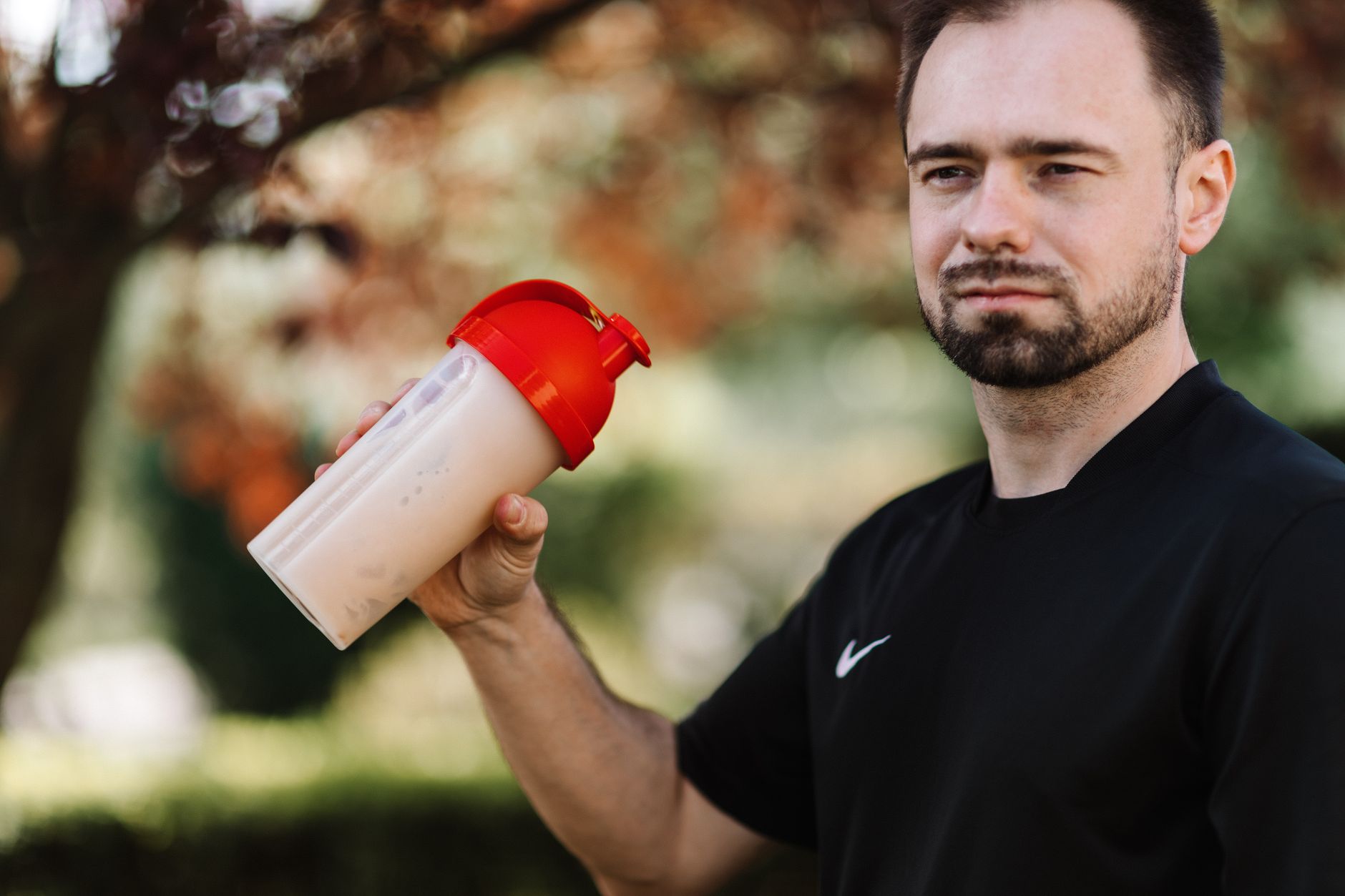
Un pre-workout est un mélange conçu pour booster énergie, concentration et congestion à l'entraînement. Les bons reposent sur quelques actifs bien dosés (caféine, citrulline, bêta-alanine) ; les mauvais empilent les excitants. Ce guide vous aide à choisir une formule efficace et sûre.
Ordres de grandeur issus des références citées dans nos guides (ISSN, EFSA, ANSES).
Qu'est-ce qu'un pre-workout ?
Un pre-workout est un mélange pris avant l'entraînement pour améliorer l'énergie, la concentration et la congestion musculaire. Ce n'est pas un produit indispensable : c'est un confort de performance, utile sur les séances difficiles.
Les trois actifs qui comptent vraiment
Derrière des listes de quinze ingrédients, l'efficacité repose sur trois molécules :
La caféine (150 à 300 mg) : énergie et vigilance, l'effet le mieux établi1.
La citrulline (6 à 8 g) : vasodilatation, sensation de congestion.
La bêta-alanine (2 à 5 g) : endurance musculaire sur les séries longues, responsable des picotements.
Le reste relève le plus souvent du marketing.
Lire une étiquette sans se faire avoir
Le signal d'alarme s'appelle le mélange propriétaire : une liste d'ingrédients avec un total global, sans le détail des doses. Impossible alors de savoir si la citrulline est à 6 g ou à 200 mg. Une formule sérieuse affiche chaque quantité.
Caféine et sécurité
Les doses de caféine des pre-workout sont élevées. L'EFSA situe le repère de sécurité autour de 400 mg par jour chez l'adulte, et 200 mg en prise unique1. Additionnez vos cafés, et évitez les prises en fin de journée : la caféine perturbe le sommeil jusqu'à six heures après ingestion.
Faut-il vraiment en prendre ?
Non. Un café et une bonne nuit de sommeil font une grande partie du travail. Le pre-workout devient intéressant sur les séances lourdes ou les coups de fatigue. Si vous êtes sensible à la caféine, les versions sans stimulants existent, ou une préparation maison à doses maîtrisées.
Sources
EFSA Panel on Dietetic Products, Nutrition and Allergies (NDA). Scientific Opinion on the safety of caffeine. EFSA Journal, 2015;13(5):4102.
ANSES. Boissons énergisantes et consommation de caféine.anses.fr
Thaler K, Kaminski A, Chapman A, Langley T, Gartlehner G. Bach Flower Remedies for psychological problems and pain: a systematic review.BMC Complementary and Alternative Medicine. 2009;9:16. doi:10.1186/1472-6882-9-16
Ernst E. Bach flower remedies: a systematic review of randomised clinical trials.Swiss Medical Weekly. 2010;140:w13079. doi:10.4414/smw.2010.13079
Organisation mondiale de la santé (OMS). L'OMS appelle les pays à réduire l'apport en sucres chez l'adulte et l'enfant (sucres libres < 10 % de la ration énergétique, idéalement < 5 %, soit environ 25 g/jour). 2015. who.int
Olsson KE, Saltin B. Variation in total body water with muscle glycogen changes in man.Acta Physiologica Scandinavica. 1970;80(1):11-18. doi:10.1111/j.1748-1716.1970.tb04764.x
Te Morenga L, Mallard S, Mann J. Dietary sugars and body weight: systematic review and meta-analyses of randomised controlled trials and cohort studies.BMJ. 2013;346:e7492. doi:10.1136/bmj.e7492
Zhang Y, Xun P, Wang R, Mao L, He K. Can Magnesium Enhance Exercise Performance?Nutrients. 2017;9(9):946. doi:10.3390/nu9090946
Guerrero-Romero F, Rodríguez-Morán M. Magnesium improves the beta-cell function to compensate variation of insulin sensitivity: double-blind, randomized clinical trial.Eur J Clin Invest. 2011;41(4):405-410. doi:10.1111/j.1365-2362.2010.02422.x
Firoz M, Graber M. Bioavailability of US commercial magnesium preparations.Magnes Res. 2001;14(4):257-262.
Rondanelli M, Opizzi A, Monteferrario F, Antoniello N, Manni R, Klersy C. The Effect of Melatonin, Magnesium, and Zinc on Primary Insomnia in Long-Term Care Facility Residents in Italy: A Double-Blind, Placebo-Controlled Clinical Trial.J Am Geriatr Soc. 2011;59(1):82-90. doi:10.1111/j.1532-5415.2010.03232.x
EFSA Panel on Dietetic Products, Nutrition and Allergies (NDA). Scientific Opinion on the substantiation of health claims related to konjac mannan (glucomannan) and reduction of body weight (ID 854, 1556, 3725) pursuant to Article 13(1) of Regulation (EC) No 1924/2006. EFSA Journal, 2010;8(10):1798. doi:10.2903/j.efsa.2010.1798
Onakpoya I, Posadzki P, Ernst E. Chromium supplementation in overweight and obesity: a systematic review and meta-analysis of randomized clinical trials.Obes Rev. 2013;14(6):496-507. doi:10.1111/obr.12026
ANSES. Avis relatif aux effets indésirables liés à la consommation de compléments alimentaires contenant Garcinia cambogia, publié le 5 mars 2025, et arrêté du 15 avril 2025 portant suspension de la mise sur le marché de ces compléments (suspension renouvelée le 16 avril 2026). legifrance.gouv.fr
Briskey D, Malfa GA, Rao A. Effectiveness of "Moro" Blood Orange Citrus sinensis Osbeck (Rutaceae) Standardized Extract on Weight Loss in Overweight but Otherwise Healthy Men and Women: A Randomized Double-Blind Placebo-Controlled Study.Nutrients. 2022;14(3):427. doi:10.3390/nu14030427
Lak M, Karimi M, Akhgarjand C, Ghotboddin Mohammadi S, Pam P, Ashtary-Larky D, Pirzad S, Amirkhan-Dehkordi M, Shahrbaf MA, Henselmans M, Asbaghi O. Effects of spirulina supplementation on body composition in adults: a GRADE-assessed and dose-response meta-analysis of RCTs.Nutr Metab (Lond). 2025;22:61. doi:10.1186/s12986-025-00959-4
Moradi S, Ziaei R, Foshati S, Mohammadi H, Nachvak SM, Rouhani MH. Effects of Spirulina supplementation on obesity: A systematic review and meta-analysis of randomized clinical trials.Complement Ther Med. 2019;47:102211. doi:10.1016/j.ctim.2019.102211
ANSES. Avis relatif aux risques liés à la consommation de compléments alimentaires contenant de la spiruline, saisine n° 2014-SA-0096, 4 août 2017. anses.fr
Hall KD. What is the required energy deficit per unit weight loss?Int J Obes (Lond). 2008;32(3):573-576. doi:10.1038/sj.ijo.0803720
Thomas DM, Martin CK, Lettieri S, et al.Can a weight loss of one pound a week be achieved with a 3500-kcal deficit? Commentary on a commonly accepted rule.Int J Obes (Lond). 2013;37(12):1611-1613. doi:10.1038/ijo.2013.51
Mifflin MD, St Jeor ST, Hill LA, Scott BJ, Daugherty SA, Koh YO. A new predictive equation for resting energy expenditure in healthy individuals.Am J Clin Nutr. 1990;51(2):241-247. doi:10.1093/ajcn/51.2.241
Frankenfield D, Roth-Yousey L, Compher C. Comparison of predictive equations for resting metabolic rate in healthy nonobese and obese adults: a systematic review.J Am Diet Assoc. 2005;105(5):775-789. doi:10.1016/j.jada.2005.02.005
Lichtman SW, Pisarska K, Berman ER, et al.Discrepancy between self-reported and actual caloric intake and exercise in obese subjects.N Engl J Med. 1992;327(27):1893-1898. doi:10.1056/NEJM199212313272701
Garthe I, Raastad T, Refsnes PE, Koivisto E, Sundgot-Borgen J. Effect of two different weight-loss rates on body composition and strength and power-related performance in elite athletes.Int J Sport Nutr Exerc Metab. 2011;21(2):97-104. doi:10.1123/ijsnem.21.2.97
EFSA Panel on Dietetic Products, Nutrition and Allergies (NDA). Scientific Opinion on Dietary Reference Values for energy.EFSA Journal. 2013;11(1):3005. doi:10.2903/j.efsa.2013.3005
Helms ER, Aragon AA, Fitschen PJ. Evidence-based recommendations for natural bodybuilding contest preparation: nutrition and supplementation.J Int Soc Sports Nutr. 2014;11:20. doi:10.1186/1550-2783-11-20
Guest NS, VanDusseldorp TA, Nelson MT, et al.International society of sports nutrition position stand: caffeine and exercise performance.J Int Soc Sports Nutr. 2021;18(1):1. doi:10.1186/s12970-020-00383-4
Trexler ET, Smith-Ryan AE, Stout JR, et al.International society of sports nutrition position stand: Beta-Alanine.J Int Soc Sports Nutr. 2015;12:30. doi:10.1186/s12970-015-0090-y
Vårvik FT, Bjørnsen T, Gonzalez AM. Acute Effect of Citrulline Malate on Repetition Performance During Strength Training: A Systematic Review and Meta-Analysis.Int J Sport Nutr Exerc Metab. 2021;31(4):350-358. doi:10.1123/ijsnem.2020-0295
Harty PS, Zabriskie HA, Erickson JL, Molling PE, Kerksick CM, Jagim AR. Multi-ingredient pre-workout supplements, safety implications, and performance outcomes: a brief review.J Int Soc Sports Nutr. 2018;15:41. doi:10.1186/s12970-018-0247-6
ANSES. Avis relatif aux risques liés à la consommation de compléments alimentaires destinés aux sportifs visant au développement musculaire ou à la diminution de la masse grasse, saisine n° 2014-SA-0008, 7 novembre 2016. anses.fr
Sievert K, Hussain SM, Page MJ, et al. Effect of breakfast on weight and energy intake: systematic review and meta-analysis of randomised controlled trials.BMJ. 2019;364:l42. doi:10.1136/bmj.l42
Dhurandhar EJ, Dawson J, Alcorn A, et al. The effectiveness of breakfast recommendations on weight loss: a randomized controlled trial.Am J Clin Nutr. 2014;100(2):507-513. doi:10.3945/ajcn.114.089573
Weigle DS, Breen PA, Matthys CC, et al. A high-protein diet induces sustained reductions in appetite, ad libitum caloric intake, and body weight despite compensatory changes in diurnal plasma leptin and ghrelin concentrations.Am J Clin Nutr. 2005;82(1):41-48. doi:10.1093/ajcn/82.1.41
U.S. Department of Agriculture, Agricultural Research Service. FoodData Central. fdc.nal.usda.gov (valeurs de composition des aliments citées comme ordres de grandeur)
Goodoory VC, Khasawneh M, Black CJ, Quigley EMM, Moayyedi P, Ford AC. Efficacy of Probiotics in Irritable Bowel Syndrome: Systematic Review and Meta-analysis.Gastroenterology. 2023;165(5):1206-1218. doi:10.1053/j.gastro.2023.07.018 (certains probiotiques semblent bénéfiques, mais l'hétérogénéité des espèces, des souches et des critères d'évaluation empêche de recommander lesquels privilégier)
Su GL, Ko CW, Bercik P, Falck-Ytter Y, Sultan S, Weizman AV, Morgan RL. AGA Clinical Practice Guidelines on the Role of Probiotics in the Management of Gastrointestinal Disorders.Gastroenterology. 2020;159(2):697-705. doi:10.1053/j.gastro.2020.05.059 (recommandation de ne pas utiliser de probiotiques dans le syndrome de l'intestin irritable hors essai clinique)
Règlement (CE) n° 1924/2006 du Parlement européen et du Conseil concernant les allégations nutritionnelles et de santé portant sur les denrées alimentaires. eur-lex.europa.eu (toute allégation de santé doit être autorisée après évaluation scientifique préalable)
Food Safety Authority of Ireland (autorité nationale de sécurité alimentaire). Probiotic Health Claims.fsai.ie (aucune allégation de santé probiotique autorisée dans l'UE ; le terme « probiotique » est lui-même traité comme une allégation de santé non autorisée)
Lis DM, Stellingwerff T, Kitic CM, Fell JW, Ahuja KDK. Low FODMAP: A Preliminary Strategy to Reduce Gastrointestinal Distress in Athletes.Med Sci Sports Exerc. 2018;50(1):116-123. doi:10.1249/MSS.0000000000001419
Ostojic SM, Ahmetovic Z. Gastrointestinal Distress After Creatine Supplementation in Athletes: Are Side Effects Dose Dependent?Research in Sports Medicine. 2008;16(1):15-22. doi:10.1080/15438620701693280
EFSA Panel on Dietetic Products, Nutrition and Allergies (NDA). Scientific Opinion on lactose thresholds in lactose intolerance and galactosaemia. EFSA Journal. 2010;8(9):1777. doi:10.2903/j.efsa.2010.1777 (la grande majorité des sujets tolère jusqu'à 12 g de lactose en une prise ; des symptômes sont décrits en dessous de 6 g chez certains)
Kadooka Y, Sato M, Imaizumi K, et al.Regulation of abdominal adiposity by probiotics (Lactobacillus gasseri SBT2055) in adults with obese tendencies in a randomized controlled trial.Eur J Clin Nutr. 2010;64(6):636-643. doi:10.1038/ejcn.2010.19
Règlement (UE) n° 1169/2011 concernant l'information des consommateurs sur les denrées alimentaires, annexe III. eur-lex.europa.eu (mention obligatoire « une consommation excessive peut avoir des effets laxatifs » au-delà de 10 % de polyols ajoutés)
Borgeraas H, Johnson LK, Skattebu J, Hertel JK, Hjelmesæth J. Effects of probiotics on body weight, body mass index, fat mass and fat percentage in subjects with overweight or obesity: a systematic review and meta-analysis of randomized controlled trials.Obes Rev. 2018;19(2):219-232. doi:10.1111/obr.12626 (effet moyen sur le poids corporel inférieur à un kilogramme, avec une qualité de preuve jugée faible)
Westwater ML, Fletcher PC, Ziauddeen H. Sugar addiction: the state of the science.European Journal of Nutrition. 2016;55(Suppl 2):55-69. doi:10.1007/s00394-016-1229-6 (revue : pas de preuve d'une dépendance au sucre chez l'humain)
Gardner CD, Trepanowski JF, Del Gobbo LC, et al.Effect of Low-Fat vs Low-Carbohydrate Diet on 12-Month Weight Loss in Overweight Adults and the Association With Genotype Pattern or Insulin Secretion: The DIETFITS Randomized Clinical Trial.JAMA. 2018;319(7):667-679. doi:10.1001/jama.2018.0245 (609 adultes, 12 mois, sucres ajoutés et céréales raffinées supprimés dans les deux groupes)
Rebouche CJ. Kinetics, pharmacokinetics, and regulation of L-carnitine and acetyl-L-carnitine metabolism.Ann N Y Acad Sci. 2004;1033:30-41. doi:10.1196/annals.1320.003 (biodisponibilité orale des compléments de L-carnitine : 14 à 18 % de la dose, absorption essentiellement passive)
Stephens FB, Constantin-Teodosiu D, Laithwaite D, Simpson EJ, Greenhaff PL. Insulin stimulates L-carnitine accumulation in human skeletal muscle.FASEB J. 2006;20(2):377-379. doi:10.1096/fj.05-4985fje (carnitine total musculaire portée de 22,0 à 24,7 mmol/kg de matière sèche sous insulinémie de 149 mIU/l ; aucun effet à l'insulinémie à jeun de 7,4 mIU/l)
Stephens FB, Evans CE, Constantin-Teodosiu D, Greenhaff PL. Carbohydrate ingestion augments L-carnitine retention in humans.J Appl Physiol. 2007;102(3):1065-1070. doi:10.1152/japplphysiol.01011.2006
Wall BT, Stephens FB, Constantin-Teodosiu D, Marimuthu K, Macdonald IA, Greenhaff PL. Chronic oral ingestion of L-carnitine and carbohydrate increases muscle carnitine content and alters muscle fuel metabolism during exercise in humans.J Physiol. 2011;589(Pt 4):963-973. doi:10.1113/jphysiol.2010.201343 (2 g de L-carnitine L-tartrate et 80 g de glucides deux fois par jour pendant 24 semaines : carnitine musculaire +21 %, glycogène épargné de 55 % à 50 % de VO2max, travail produit +11 %)
Pooyandjoo M, Nouhi M, Shab-Bidar S, Djafarian K, Olyaeemanesh A. The effect of (L-)carnitine on weight loss in adults: a systematic review and meta-analysis of randomized controlled trials.Obes Rev. 2016;17(10):970-976. doi:10.1111/obr.12436 (9 essais, 911 participants : −1,33 kg, IC 95 % −2,09 à −0,57 ; IMC −0,47 kg/m² ; l'ampleur de l'effet décroît significativement avec la durée, p = 0,002)
Talenezhad N, Mohammadi M, Ramezani-Jolfaie N, Mozaffari-Khosravi H, Salehi-Abargouei A. Effects of l-carnitine supplementation on weight loss and body composition: A systematic review and meta-analysis of 37 randomised controlled clinical trials with dose-response analysis.Clin Nutr ESPEN. 2020;37:9-23. doi:10.1016/j.clnesp.2020.03.008 (effet réducteur modeste sur le poids, l'IMC et la masse grasse, surtout en surpoids ou en obésité)
EFSA Panel on Dietetic Products, Nutrition and Allergies (NDA). Scientific Opinion on the substantiation of health claims related to L-carnitine and faster recovery from muscle fatigue after exercise, skeletal muscle tissue repair, increase in endurance capacity, maintenance of normal blood LDL-cholesterol concentrations, contribution to normal spermatogenesis and « energy metabolism ». EFSA Journal, 2011;9(6):2212. doi:10.2903/j.efsa.2011.2212 (avis défavorable sur l'ensemble des allégations examinées)
EFSA Panel on Nutrition, Novel Foods and Food Allergens (NDA). L-carnitine and contribution to normal lipid metabolism: evaluation of a health claim pursuant to Article 13(5) of Regulation (EC) No 1924/2006. EFSA Journal, 2018;16(1):5137. doi:10.2903/j.efsa.2018.5137 (relation de cause à effet non établie entre la consommation de L-carnitine et un métabolisme lipidique normal)
Koeth RA, Wang Z, Levison BS, et al.Intestinal microbiota metabolism of L-carnitine, a nutrient in red meat, promotes atherosclerosis.Nat Med. 2013;19(5):576-585. doi:10.1038/nm.3145 (production de TMAO dépendante du microbiote, plus élevée chez les omnivores que chez les végétariens et végétaliens ; chez 2 595 patients explorés en cardiologie, la carnitine plasmatique n'était associée au risque cardiovasculaire que chez ceux dont le TMAO était également élevé)
Fu Z, Zhou S, Gu X. Effects of spirulina supplementation alone or with exercise on cardiometabolic health in overweight and obese adults: a systematic review and meta-analysis.Front Nutr. 2025;12:1624982. doi:10.3389/fnut.2025.1624982 (23 études, 28 bras, 1 035 adultes en surpoids ou en situation d'obésité ; spiruline seule : poids g = −0,30 [IC 95 % −0,53 à −0,08], IMC, masse grasse et tour de taille non significatifs, cholestérol total −0,79, triglycérides −0,64, LDL −0,71, HDL +0,53 ; sous-groupe spiruline + exercice, 7 essais et 168 participants : poids g = 0,01)
Clegg DO, Reda DJ, Harris CL, et al.Glucosamine, Chondroitin Sulfate, and the Two in Combination for Painful Knee Osteoarthritis.N Engl J Med. 2006;354(8):795-808. doi:10.1056/NEJMoa052771 (essai GAIT, 1 583 patients, 24 semaines : glucosamine, chondroïtine et l'association ne diffèrent pas du placebo sur l'ensemble du groupe ; signal non planifié dans le sous-groupe à douleur modérée à sévère ; effets indésirables comparables au placebo)
Wandel S, Jüni P, Tendal B, et al.Effects of glucosamine, chondroitin, or placebo in patients with osteoarthritis of hip or knee: network meta-analysis.BMJ. 2010;341:c4675. doi:10.1136/bmj.c4675 (10 essais, 3 803 patients : effet sur la douleur inférieur au seuil de pertinence clinique fixé a priori, pas d'effet sur le pincement de l'interligne articulaire)
Dostrovsky NR, Towheed TE, Hudson RW, Anastassiades TP. The effect of glucosamine on glucose metabolism in humans: a systematic review of the literature.Osteoarthritis Cartilage. 2011;19(4):375-380. doi:10.1016/j.joca.2011.01.007 (glucosamine orale aux doses usuelles : pas d'effet sur le métabolisme du glucose chez le sujet sain ni chez le diabétique)
Muniyappa R, Karne RJ, Hall G, et al.Oral Glucosamine for 6 Weeks at Standard Doses Does Not Cause or Worsen Insulin Resistance or Endothelial Dysfunction in Lean or Obese Subjects.Diabetes. 2006;55(11):3142-3150. doi:10.2337/db06-0714 (essai croisé contre placebo, 500 mg trois fois par jour pendant 6 semaines)
EFSA Panel on Dietetic Products, Nutrition and Allergies (NDA). Scientific Opinion on the substantiation of a health claim related to glucosamine and maintenance of normal joint cartilage pursuant to Article 13(5) of Regulation (EC) No 1924/2006.EFSA Journal. 2012;10(5):2691. doi:10.2903/j.efsa.2012.2691 (relation de cause à effet non établie chez le sujet sans arthrose ; captation de la glucosamine alimentaire par le cartilage jugée très limitée chez l'humain)
Bannuru RR, Osani MC, Vaysbrot EE, et al.OARSI guidelines for the non-surgical management of knee, hip, and polyarticular osteoarthritis.Osteoarthritis Cartilage. 2019;27(11):1578-1589. doi:10.1016/j.joca.2019.06.011 (exercice structuré et perte de poids en première ligne ; glucosamine non recommandée)
Messier SP, Gutekunst DJ, Davis C, DeVita P. Weight loss reduces knee-joint loads in overweight and obese older adults with knee osteoarthritis.Arthritis Rheum. 2005;52(7):2026-2032. doi:10.1002/art.21139 (chaque kilogramme de poids corporel perdu retire environ 4 kg de charge compressive au genou à chaque pas)
Messier SP, Mihalko SL, Legault C, et al.Effects of Intensive Diet and Exercise on Knee Joint Loads, Inflammation, and Clinical Outcomes Among Overweight and Obese Adults With Knee Osteoarthritis: The IDEA Randomized Clinical Trial.JAMA. 2013;310(12):1263-1273. doi:10.1001/jama.2013.277669 (régime + exercice contre exercice seul : forces de compression du genou plus basses, IL-6 plus basse, douleur moindre)