L'essentiel à savoir
Les repères à retenir
3-5 gpar jour
2-4 sem.avant les premiers effets
+20-40 %de réserves musculaires
20-30 %de non-répondeurs
Ordres de grandeur issus des références citées dans nos guides (ISSN, EFSA, ANSES).
Quel est le rôle de la créatine ?
La créatine est un dérivé d'acide aminé naturellement présent dans nos muscles, que l'on trouve aussi dans la viande et le poisson. Son rôle est simple et central : elle sert à régénérer l'ATP, la molécule qui fournit l'énergie immédiate lors des efforts brefs et intenses.
Concrètement, des réserves de créatine mieux remplies permettent d'enchaîner plus de répétitions et de soulever plus lourd, donc de créer plus de stimulus pour progresser.
Les bienfaits prouvés
La créatine est le complément le plus étudié de la nutrition sportive, et l'un des rares dont l'efficacité fait consensus1 : gain de force, de puissance et, à terme, de masse musculaire chez le pratiquant de musculation.
La recherche explore aussi des effets sur la récupération et certaines fonctions cognitives, mais le cœur du bénéfice reste la performance sur efforts courts et intenses.
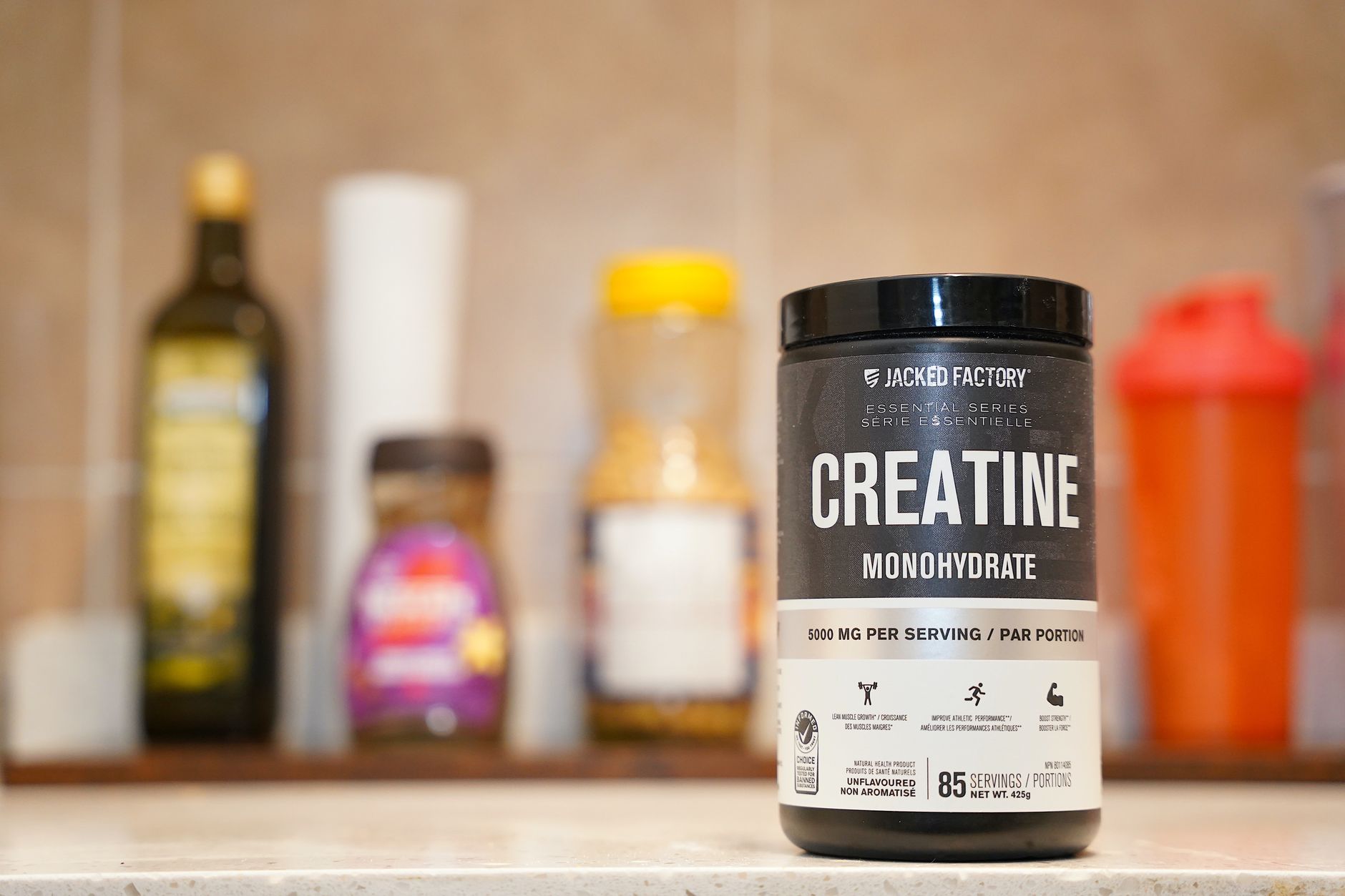
Inutile de payer pour des formes exotiques : la créatine monohydrate est la plus étudiée, la plus efficace et la moins chère. Les autres formes (HCl, kre-alkalyn, esters) n'ont jamais démontré de supériorité réelle.
Le seul critère qui compte vraiment, c'est la pureté du produit : privilégiez une monohydrate portant un label de pureté reconnu et une composition sans additif superflu.
Combien en prendre, et quand ?
3 à 5 g par jour, tous les jours, y compris les jours de repos. Le moment de la prise n'a pas d'importance démontrée : c'est la régularité qui sature progressivement les muscles. La phase de charge (20 g/jour pendant une semaine) est optionnelle ; elle accélère simplement la saturation.
Tous les détails dans notre guide quand prendre la créatine.
Inconvénients et effet sur les reins
C'est la question qui revient le plus. Chez une personne aux reins sains, des décennies d'études n'ont mis en évidence aucun danger rénal lié à la créatine aux doses usuelles. La prudence (et un avis médical) ne s'imposent qu'en cas de pathologie rénale préexistante.
Les vrais inconvénients sont mineurs : une légère prise de poids les premiers jours (de l'eau stockée dans le muscle, pas de la graisse) et, rarement, un inconfort digestif si la dose est prise en une fois.
Pour qui ?
Pour tout pratiquant de sports de force ou d'efforts explosifs. Elle est également sûre et efficace chez la femme, avec les mêmes dosages. Environ 20 à 30 % des personnes sont dites « non répondeuses », leurs réserves naturelles étant déjà hautes, elles en ressentent moins les effets.
Sources scientifiques
- Jäger R, Kerksick CM, Campbell BI, et al. International Society of Sports Nutrition Position Stand: protein and exercise. J Int Soc Sports Nutr. 2017;14:20. doi:10.1186/s12970-017-0177-8
- Morton RW, Murphy KT, McKellar SR, et al. A systematic review, meta-analysis and meta-regression of the effect of protein supplementation on resistance training-induced gains in muscle mass and strength. Br J Sports Med. 2018;52(6):376-384. doi:10.1136/bjsports-2017-097608
- Cruzat V, Macedo Rogero M, Noel Keane K, Curi R, Newsholme P. Glutamine: Metabolism and Immune Function, Supplementation and Clinical Translation. Nutrients. 2018;10(11):1564. doi:10.3390/nu10111564
- Kerksick CM, Wilborn CD, Roberts MD, et al. ISSN exercise & sports nutrition review update: research & recommendations. J Int Soc Sports Nutr. 2018;15:38. doi:10.1186/s12970-018-0242-y
- Legault Z, Bagnall N, Kimmerly DS. The Influence of Oral L-Glutamine Supplementation on Muscle Strength Recovery and Soreness Following Unilateral Knee Extension Eccentric Exercise. Int J Sport Nutr Exerc Metab. 2015;25(5):417-426. doi:10.1123/ijsnem.2014-0209
- Hutson M, Pugh JN, Sage S, et al. Glutamine supplementation reduces markers of intestinal permeability during running in the heat in a dose-dependent manner. Eur J Appl Physiol. 2017;117(12):2569-2577. doi:10.1007/s00421-017-3744-4
- Kreider RB, Kalman DS, Antonio J, et al. International Society of Sports Nutrition position stand: safety and efficacy of creatine supplementation in exercise, sport, and medicine. J Int Soc Sports Nutr. 2017;14:18. doi:10.1186/s12970-017-0173-z
- Ciccone V, Cabrera K, Antonio J. The effects of pre versus post workout supplementation of creatine monohydrate on body composition and strength. J Int Soc Sports Nutr. 2013;10:36. doi:10.1186/1550-2783-10-36
- Ribeiro F, Longobardi I, Perim P, et al. Timing of Creatine Supplementation around Exercise: A Real Concern? Nutrients. 2021;13(8):2844. doi:10.3390/nu13082844
- Candow DG, Vogt E, Johannsmeyer S, Forbes SC, Farthing JP. Strategic creatine supplementation and resistance training in healthy older adults. Appl Physiol Nutr Metab. 2015;40(7):689-694. doi:10.1139/apnm-2014-0498
- Forbes SC, Candow DG. Timing of Creatine Supplementation and Resistance Training: A Brief Review. Journal of Exercise and Nutrition. 2018;1(5).
- Waldron M, Patterson SD, Tallent J, Jeffries O. The Effects of an Oral Taurine Dose and Supplementation Period on Endurance Exercise Performance in Humans: A Meta-Analysis. Sports Med. 2018;48(5):1247-1253. doi:10.1007/s40279-018-0896-2
- Deng H, Song T, Yin M, et al. Does One Shot Work? The Acute Impact of a Single Taurine Dose on Exercise Performance: A Meta-Analytic Review. Scand J Med Sci Sports. 2025;35(9):e70123. doi:10.1111/sms.70123
- EFSA Panel on Food Additives and Nutrient Sources added to Food (ANS). The use of taurine and D-glucurono-γ-lactone as constituents of the so-called 'energy' drinks. EFSA Journal. 2009;7(2):935. doi:10.2903/j.efsa.2009.935
- Wolfe RR. Branched-chain amino acids and muscle protein synthesis in humans: myth or reality? J Int Soc Sports Nutr. 2017;14:30. doi:10.1186/s12970-017-0184-9
- The Italian ALS Study Group. Branched-chain amino acids and amyotrophic lateral sclerosis: a treatment failure? Neurology. 1993;43(12):2466-2470. doi:10.1212/WNL.43.12.2466
- Pooyandjoo M, Nouhi Z, Shab-Bidar S, Djafarian K, Olyaeemanesh A. The effect of (L-)carnitine on weight loss in adults: a systematic review and meta-analysis of randomized controlled trials. Obes Rev. 2016;17(10):970-976. doi:10.1111/obr.12436
- Wall BT, Stephens FB, Constantin-Teodosiu D, Marimuthu K, Macdonald IA, Greenhaff PL. Chronic oral ingestion of L-carnitine and carbohydrate increases muscle carnitine content and alters muscle fuel metabolism during exercise in humans. J Physiol. 2011;589(Pt 4):963-973. doi:10.1113/jphysiol.2010.201343
- Fielding R, Riede L, Lugo JP, Bellamine A. l-Carnitine Supplementation in Recovery after Exercise. Nutrients. 2018;10(3):349. doi:10.3390/nu10030349
- Sawicka AK, Renzi G, Olek RA. The bright and the dark sides of L-carnitine supplementation: a systematic review. J Int Soc Sports Nutr. 2020;17:49. doi:10.1186/s12970-020-00377-2
- Jäger R, Purpura M, Shao A, Inoue T, Kreider RB. Analysis of the efficacy, safety, and regulatory status of novel forms of creatine. Amino Acids. 2011;40(5):1369-1383. doi:10.1007/s00726-011-0874-6
- Jagim AR, Oliver JM, Sanchez A, et al. A buffered form of creatine does not promote greater changes in muscle creatine content, body composition, or training adaptations than creatine monohydrate. J Int Soc Sports Nutr. 2012;9:43. doi:10.1186/1550-2783-9-43
- Murillo Zapata CM, Cardona Gil CP, Acosta Bermúdez LC. Clorhidrato de creatina versus monohidrato de creatina: diferencias en solubilidad, efectos ergogénicos y composición corporal. Perspectivas en Nutrición Humana. 2022;24(2):233-246. doi:10.17533/udea.penh.v24n2a06
- Salem A, Ben Maaoui K, Jahrami H, et al. Attenuating Muscle Damage Biomarkers and Muscle Soreness After an Exercise-Induced Muscle Damage with Branched-Chain Amino Acid (BCAA) Supplementation: A Systematic Review and Meta-analysis with Meta-regression. Sports Medicine - Open. 2024;10:42. doi:10.1186/s40798-024-00686-9
- Martinho DV, Nobari H, Faria A, Field A, Duarte D, Sarmento H. Oral Branched-Chain Amino Acids Supplementation in Athletes: A Systematic Review. Nutrients. 2022;14(19):4002. doi:10.3390/nu14194002
- Pérez-Guisado J, Jakeman PM. Citrulline malate enhances athletic anaerobic performance and relieves muscle soreness. J Strength Cond Res. 2010;24(5):1215-1222. doi:10.1519/JSC.0b013e3181cb28e0
- Trexler ET, Persky AM, Ryan ED, Schwartz TA, Stoner L, Smith-Ryan AE. Acute Effects of Citrulline Supplementation on High-Intensity Strength and Power Performance: A Systematic Review and Meta-Analysis. Sports Med. 2019;49(5):707-718. doi:10.1007/s40279-019-01091-z
- Bendahan D, Mattei JP, Ghattas B, Confort-Gouny S, Le Guern ME, Cozzone PJ. Citrulline/malate promotes aerobic energy production in human exercising muscle. Br J Sports Med. 2002;36(4):282-289. doi:10.1136/bjsm.36.4.282
- Chappell AJ, Allwood DM, Johns R, Brown S, Sultana K, Anand A, Simper T. Citrulline malate supplementation does not improve German Volume Training performance or reduce muscle soreness in moderately trained males and females. J Int Soc Sports Nutr. 2018;15:42. doi:10.1186/s12970-018-0245-8
- Schoenfeld BJ, Aragon AA. How much protein can the body use in a single meal for muscle-building? Implications for daily protein distribution. J Int Soc Sports Nutr. 2018;15:10. doi:10.1186/s12970-018-0215-1
- Moro T, Tinsley G, Bianco A, et al. Effects of eight weeks of time-restricted feeding (16/8) on basal metabolism, maximal strength, body composition, inflammation, and cardiovascular risk factors in resistance-trained males. J Transl Med. 2016;14:290. doi:10.1186/s12967-016-1044-0
- Mourao DM, Bressan J, Campbell WW, Mattes RD. Effects of food form on appetite and energy intake in lean and obese young adults. Int J Obes. 2007;31(11):1688-1695. doi:10.1038/sj.ijo.0803667
- ANSES. Table de composition nutritionnelle des aliments Ciqual. ciqual.anses.fr
- Hultman E, Söderlund K, Timmons JA, Cederblad G, Greenhaff PL. Muscle creatine loading in men. J Appl Physiol. 1996;81(1):232-237. doi:10.1152/jappl.1996.81.1.232
- Syrotuik DG, Bell GJ. Acute creatine monohydrate supplementation: a descriptive physiological profile of responders vs. nonresponders. J Strength Cond Res. 2004;18(3):610-617. doi:10.1519/12392.1
- Jackman SR, Witard OC, Philp A, Wallis GA, Baar K, Tipton KD. Branched-Chain Amino Acid Ingestion Stimulates Muscle Myofibrillar Protein Synthesis following Resistance Exercise in Humans. Front Physiol. 2017;8:390. doi:10.3389/fphys.2017.00390
- Mifflin MD, St Jeor ST, Hill LA, Scott BJ, Daugherty SA, Koh YO. A new predictive equation for resting energy expenditure in healthy individuals. Am J Clin Nutr. 1990;51(2):241-247. doi:10.1093/ajcn/51.2.241
- Frankenfield D, Roth-Yousey L, Compher C. Comparison of predictive equations for resting metabolic rate in healthy nonobese and obese adults: a systematic review. J Am Diet Assoc. 2005;105(5):775-789. doi:10.1016/j.jada.2005.02.005
- Slater GJ, Dieter BP, Marsh DJ, Helms ER, Shaw G, Iraki J. Is an Energy Surplus Required to Maximize Skeletal Muscle Hypertrophy Associated With Resistance Training? Front Nutr. 2019;6:131. doi:10.3389/fnut.2019.00131
- Iraki J, Fitschen P, Espinar S, Helms E. Nutrition Recommendations for Bodybuilders in the Off-Season: A Narrative Review. Sports (Basel). 2019;7(7):154. doi:10.3390/sports7070154
- Garthe I, Raastad T, Refsnes PE, Sundgot-Borgen J. Effect of nutritional intervention on body composition and performance in elite athletes. Eur J Sport Sci. 2013;13(3):295-303. doi:10.1080/17461391.2011.643923
- Kerksick CM, Arent S, Schoenfeld BJ, et al. International society of sports nutrition position stand: nutrient timing. J Int Soc Sports Nutr. 2017;14:33. doi:10.1186/s12970-017-0189-4
- Schoenfeld BJ, Aragon AA, Krieger JW. The effect of protein timing on muscle strength and hypertrophy: a meta-analysis. J Int Soc Sports Nutr. 2013;10:53. doi:10.1186/1550-2783-10-53
- Aragon AA, Schoenfeld BJ. Nutrient timing revisited: is there a post-exercise anabolic window? J Int Soc Sports Nutr. 2013;10:5. doi:10.1186/1550-2783-10-5
- Schoenfeld BJ, Aragon AA, Wilborn CD, Krieger JW, Sonmez GT. Body composition changes associated with fasted versus non-fasted aerobic exercise. J Int Soc Sports Nutr. 2014;11:54. doi:10.1186/s12970-014-0054-7
- Burke DG, Chilibeck PD, Parise G, Candow DG, Mahoney D, Tarnopolsky M. Effect of creatine and weight training on muscle creatine and performance in vegetarians. Med Sci Sports Exerc. 2003;35(11):1946-1955. doi:10.1249/01.MSS.0000093614.17517.79
- Antonio J, Candow DG, Forbes SC, et al. Common questions and misconceptions about creatine supplementation: what does the scientific evidence really show? J Int Soc Sports Nutr. 2021;18:13. doi:10.1186/s12970-021-00412-w
- Candow DG, Chilibeck PD, Burke DG, Davison KS, Smith-Palmer T. Effect of glutamine supplementation combined with resistance training in young adults. Eur J Appl Physiol. 2001;86(2):142-149. doi:10.1007/s00421-001-0523-y
- Ramezani Ahmadi A, Rayyani E, Bahreini M, Mansoori A. The effect of glutamine supplementation on athletic performance, body composition, and immune function: A systematic review and a meta-analysis of clinical trials. Clin Nutr. 2019;38(3):1076-1091. doi:10.1016/j.clnu.2018.05.001
- Zhou Q, Verne ML, Fields JZ, et al. Randomised placebo-controlled trial of dietary glutamine supplements for postinfectious irritable bowel syndrome. Gut. 2019;68(6):996-1002. doi:10.1136/gutjnl-2017-315136
- Rolls BJ. The relationship between dietary energy density and energy intake. Physiol Behav. 2009;97(5):609-615. doi:10.1016/j.physbeh.2009.03.011
- ANSES. Les fibres alimentaires : définitions, méthodes de dosage, valeurs de référence. anses.fr (repère de 30 g/jour chez l'adulte)
- EFSA, Scientific Panel on Food Additives, Flavourings, Processing Aids and Materials in Contact with Food (AFC). Opinion on creatine monohydrate for use in foods for particular nutritional uses. EFSA Journal. 2004;2(4):36 (spécification de pureté : créatinine ≤ 100 mg/kg, dicyandiamide ≤ 50 mg/kg, dihydro-1,3,5-triazine non détectable). doi:10.2903/j.efsa.2004.36
- Moret S, Prevarin A, Tubaro F. Levels of creatine, organic contaminants and heavy metals in creatine dietary supplements. Food Chem. 2011;126(3):1232-1238. doi:10.1016/j.foodchem.2010.12.028
- SuppCo (plateforme indépendante de tests de compléments). Creatine Reality Check : the failures we found when testing popular products. Analyse de 11 produits (5 poudres, 6 gommes) en laboratoire indépendant accrédité ISO 17025, 12 juin 2025. Rapport de tests industriels, non revu par les pairs. supp.co
- Schwedhelm E, Maas R, Freese R, et al. Pharmacokinetic and pharmacodynamic properties of oral L-citrulline and L-arginine: impact on nitric oxide metabolism. Br J Clin Pharmacol. 2008;65(1):51-59. doi:10.1111/j.1365-2125.2007.02990.x
- Khalaf D, Krüger M, Wehland M, Infanger M, Grimm D. The Effects of Oral l-Arginine and l-Citrulline Supplementation on Blood Pressure. Nutrients. 2019;11(7):1679. doi:10.3390/nu11071679
- Snijders T, Res PT, Smeets JSJ, et al. Protein Ingestion before Sleep Increases Muscle Mass and Strength Gains during Prolonged Resistance-Type Exercise Training in Healthy Young Men. J Nutr. 2015;145(6):1178-1184. doi:10.3945/jn.114.208371
- EFSA, Panel on Dietetic Products, Nutrition and Allergies (NDA). Scientific Opinion on the substantiation of health claims related to creatine and increase in physical performance during short-term, high intensity, repeated exercise bouts. EFSA Journal. 2011;9(7):2303 (allégation retenue pour un apport de 3 g de créatine par jour). doi:10.2903/j.efsa.2011.2303
- Anvisa (agence sanitaire brésilienne). Creatinas: Anvisa divulga resultados de análise em suplementos. 23 avril 2025 (analyse de suppléments de créatine du marché brésilien : nombreuses erreurs d'étiquetage relevées, teneurs conformes aux attentes). gov.br/anvisa
- Organisation mondiale de la santé (OMS) / FAO / UNU. Protein and amino acid requirements in human nutrition, rapport d'une consultation conjointe d'experts, WHO Technical Report Series n° 935, 2007 (besoins de l'adulte : leucine 39 mg/kg/jour, isoleucine 20 mg/kg/jour, valine 26 mg/kg/jour). iris.who.int
- Moberg M, Apró W, Ekblom B, van Hall G, Holmberg HC, Blomstrand E. Activation of mTORC1 by leucine is potentiated by branched-chain amino acids and even more so by essential amino acids following resistance exercise. Am J Physiol Cell Physiol. 2016;310(11):C874-C884. doi:10.1152/ajpcell.00374.2015
- Schoenfeld BJ, Aragon AA, Krieger JW. Effects of meal frequency on weight loss and body composition: a meta-analysis. Nutr Rev. 2015;73(2):69-82. doi:10.1093/nutrit/nuu017
- Smith-Ryan AE, Cabre HE, Eckerson JM, Candow DG. Creatine Supplementation in Women's Health: A Lifespan Perspective. Nutrients. 2021;13(3):877. doi:10.3390/nu13030877 (réserves endogènes de créatine 70 à 80 % plus basses chez la femme ; dose de 0,3 g/kg/jour étudiée après la ménopause)
- van der Merwe J, Brooks NE, Myburgh KH. Three weeks of creatine monohydrate supplementation affects dihydrotestosterone to testosterone ratio in college-aged rugby players. Clin J Sport Med. 2009;19(5):399-404. doi:10.1097/JSM.0b013e3181b8b52f (20 joueurs ; rapport DHT/testostérone en hausse de 36 % après la charge, aucune mesure capillaire)
- Powers ME, Arnold BL, Weltman AL, et al. Creatine Supplementation Increases Total Body Water Without Altering Fluid Distribution. J Athl Train. 2003;38(1):44-50. PMID 12937471
- Forbes SC, Candow DG, Krentz JR, Roberts MD, Young KC. Changes in Fat Mass Following Creatine Supplementation and Resistance Training in Adults ≥50 Years of Age: A Meta-Analysis. J Funct Morphol Kinesiol. 2019;4(3):62. doi:10.3390/jfmk4030062 (19 études, 609 participants : −0,55 point de pourcentage de masse grasse contre placebo, la masse grasse en kilos ne différant pas significativement)
- Harris RC, Lowe JA, Warnes K, Orme CE. The concentration of creatine in meat, offal and commercial dog food. Res Vet Sci. 1997;62(1):58-62. doi:10.1016/S0034-5288(97)90181-8 (dosage analytique : 27,8 à 32,3 mmol/kg, soit 3,6 à 4,3 g/kg, dans le poulet, le bœuf et le lapin crus)
- Balsom PD, Söderlund K, Ekblom B. Creatine in humans with special reference to creatine supplementation. Sports Med. 1994;18(4):268-280. doi:10.2165/00007256-199418040-00005 (revue à l'origine du tableau de teneurs alimentaires repris partout, hareng compris)
- Elbir Z, Oz F. Determination of creatine, creatinine, free amino acid and heterocyclic aromatic amine contents of plain beef and chicken juices. J Food Sci Technol. 2021;58(9):3293-3302. doi:10.1007/s13197-020-04875-8 (bœuf cru 3,92 à 4,45 mg/g de créatine, poulet cru 3,80 à 4,04 mg/g ; conversion en créatinine surtout dans les quarante premières minutes de chauffage)
- U.S. Department of Agriculture, Agricultural Research Service. FoodData Central. fdc.nal.usda.gov (composition des viandes et poissons crus, dont la teneur en protéines de l'ordre de 21 g pour 100 g de bœuf maigre)
- Ogden HB, Fallowfield JL, Child RB, et al. No protective benefits of low dose acute L-glutamine supplementation on small intestinal permeability, epithelial injury and bacterial translocation biomarkers in response to subclinical exertional-heat stress: a randomized cross-over trial. Temperature (Austin). 2022;9(2):196-210. doi:10.1080/23328940.2021.2015227
- Jäger R, Mohr AE, Carpenter KC, et al. International Society of Sports Nutrition Position Stand: Probiotics. J Int Soc Sports Nutr. 2019;16(1):62. doi:10.1186/s12970-019-0329-0 (les effets des probiotiques sont spécifiques de la souche et de la dose ; bénéfices documentés sur le confort digestif et les infections des voies respiratoires hautes chez le sportif)
- Hill C, Guarner F, Reid G, et al. Expert consensus document. The International Scientific Association for Probiotics and Prebiotics consensus statement on the scope and appropriate use of the term probiotic. Nat Rev Gastroenterol Hepatol. 2014;11(8):506-514. doi:10.1038/nrgastro.2014.66 (définition : micro-organismes vivants qui, administrés en quantité suffisante, confèrent un bénéfice pour la santé de l'hôte ; un bénéfice est attaché à une souche identifiée, non à un genre bactérien)
- Pugh JN, Sparks AS, Doran DA, et al. Four weeks of probiotic supplementation reduces GI symptoms during a marathon race. Eur J Appl Physiol. 2019;119(7):1491-1501. doi:10.1007/s00421-019-04136-3 (24 coureurs récréatifs ; 25 milliards d'UFC par jour, quatre souches, pendant 28 jours avant un marathon : incidence et sévérité des symptômes digestifs réduites pendant l'épreuve)
- Chantler S, Griffiths A, Matu J, et al. A systematic review: Role of dietary supplements on markers of exercise-associated gut damage and permeability. PLoS One. 2022;17(4):e0266379. doi:10.1371/journal.pone.0266379 (27 études incluses ; aucune ne teste la glutamine et un probiotique dans le même bras ; côté glutamine, effet dose-dépendant retrouvé en course à la chaleur mais pas en cyclisme ; côté probiotiques, résultats positifs limités aux essais mono-souche, aucun effet des formules multi-souches sur ces marqueurs)
- Geyer H, Parr MK, Mareck U, Reinhart U, Schrader Y, Schänzer W. Analysis of non-hormonal nutritional supplements for anabolic-androgenic steroids: results of an international study. Int J Sports Med. 2004;25(2):124-129. doi:10.1055/s-2004-819955 (634 compléments achetés dans 13 pays ; 14,8 % contenaient des stéroïdes anabolisants non déclarés, 21,1 % chez les fabricants vendant aussi des prohormones contre 9,6 % chez les autres)
- Agence mondiale antidopage (AMA). Liste des interdictions, standard international du Code mondial antidopage (liste 2026 en vigueur depuis le 1er janvier 2026 ; classes S0 à S10, M1 à M3 et P1 ; la créatine n'y figure dans aucune classe). wada-ama.org
- AFSSA (devenue ANSES). Évaluation des risques présentés par la créatine pour le consommateur et de la véracité des allégations relatives à la performance sportive ou à l'augmentation de la masse musculaire, rapport et avis du 23 janvier 2001. anses.fr
- CEN / AFNOR. NF EN 17444 – Prévention du dopage dans le sport : bonnes pratiques de développement et de fabrication des denrées alimentaires destinées aux sportifs et des compléments alimentaires, publiée en février 2021, en vigueur depuis le 10 juin 2021 (référentiel d'application volontaire). boutique.afnor.org
- ANSES. Avis et rapport d'expertise collective relatifs aux risques liés à la consommation de compléments alimentaires destinés aux sportifs visant le développement musculaire ou la diminution de la masse grasse, saisine n° 2014-SA-0008, novembre 2016. anses.fr
- ABCD (Autoridade Brasileira de Controle de Dopagem). Lista de Substâncias e Métodos Proibidos no Esporte, version brésilienne de la liste 2026, en vigueur depuis le 1er janvier 2026. gov.br/abcd
- Churchward-Venne TA, Burd NA, Mitchell CJ, et al. Supplementation of a suboptimal protein dose with leucine or essential amino acids: effects on myofibrillar protein synthesis at rest and following resistance exercise in men. J Physiol. 2012;590(11):2751-2765. doi:10.1113/jphysiol.2012.228833 (une petite dose de protéines enrichie en leucine relance la synthèse myofibrillaire à court terme, mais seul l'apport complet en acides aminés essentiels soutient la réponse au-delà)
- PubChem, base de données publique du NCBI, U.S. National Library of Medicine. Compound Summary : Creatine (CID 586), Creatine monohydrate (CID 80116), Creatine hydrochloride (CID 134732). pubchem.ncbi.nlm.nih.gov (masses molaires : créatine 131,13 g/mol, monohydrate 149,15 g/mol, chlorhydrate 167,59 g/mol)
- Gufford BT, Sriraghavan K, Miller NJ, Miller DW, Gu X, Vennerstrom JL, Robinson DH. Physicochemical Characterization of Creatine N-Methylguanidinium Salts. J Diet Suppl. 2010;7(3):240-252. doi:10.3109/19390211.2010.491507 (le chlorhydrate est environ 38 fois plus soluble dans l'eau que la monohydrate à 25 °C ; sa perméabilité sur monocouche Caco-2 ne diffère pas de celle de la monohydrate)
- Londoño-Velásquez D, Zuluaga-Narváez Y, Rojas-Posada L, et al. Creatine monohydrate versus creatine hydrochloride on strength and body composition in elite team-sport athletes: A placebo-controlled randomized clinical trial comparing low dosages. J Int Soc Sports Nutr. 2025;22(sup1):2533658. doi:10.1080/15502783.2025.2533658 (31 athlètes d'élite, 8 semaines, 5 g par jour dans les deux bras actifs : aucune différence significative entre les groupes sur la force ni sur la composition corporelle)
Chaque affirmation nutritionnelle de cet article s'appuie sur ces publications.